What Does Six Seven Mean?
Contents
Key takeaways
- "Six seven" (also written as 6 7 or 67) is a viral slang term with no fixed meaning, popularized in 2025 by Gen Alpha — the generation born between 2010 and 2024.
- The phrase comes from the drill rap song "Doot Doot (6 7)" by Philadelphia rapper Skrilla and spread massively after a viral basketball video.
- Dictionary.com named "67" its 2025 Word of the Year, defining it as "a burst of energy that spreads and connects people long before anyone agrees on what it actually means."
- "Six seven" is a great example of how internet slang spreads faster than anyone can define it — and why keeping up with real, everyday English matters more than ever.
- If you want to actually understand people online and in real life, learning living English — including how slang works — is key.
You're scrolling through TikTok. A kid yells "SIX SEVEN 🗣️‼️" into the camera and walks away. Everyone in the comments loses it. You have no idea what just happened.
Don't worry. You're not alone. Even native English speakers had to Google this one.
"Six seven" is one of the most talked-about pieces of Gen Alpha slang from 2025. The slang term "six seven" is a viral, intentionally nonsensical internet meme popular among Generation Alpha and younger teens. It went from a rap lyric to a global meme in a matter of weeks. And the wildest part? It doesn't really mean anything. That's kind of the point.
What does the nonsensical expression connected to "six seven" mean?
“Six seven” is a viral internet slang expression used by Gen Alpha and Gen Z in classrooms and social settings. It has no fixed meaning. Depending on context, people use it as a random exclamation, a way to say “meh” or “so-so,” a filler word, or simply as a joke.
Merriam-Webster defines it as “a nonsensical expression used especially by teens and tweens that is connected to a rap song and also to a 6 ft. 7 in. basketball player.”
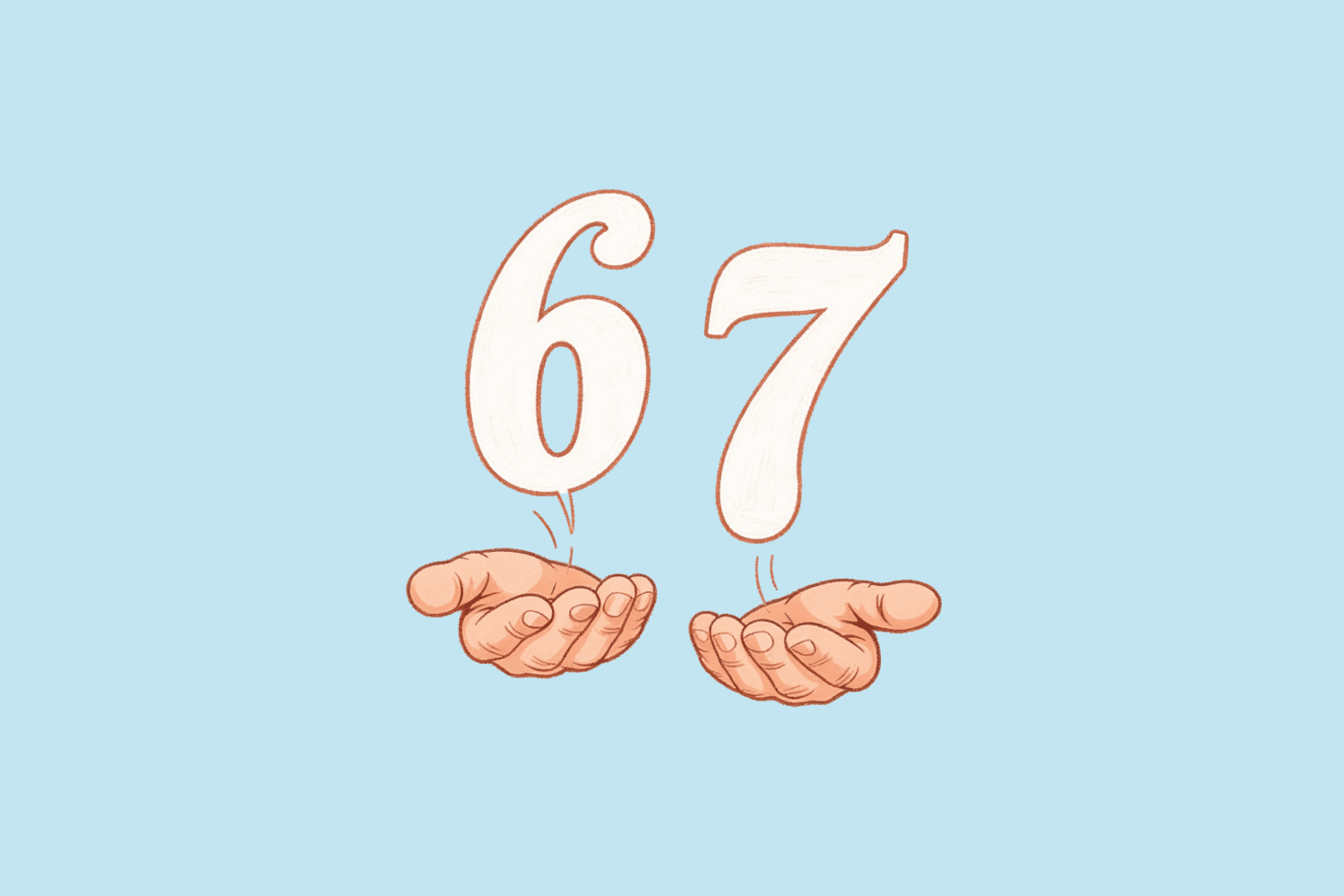
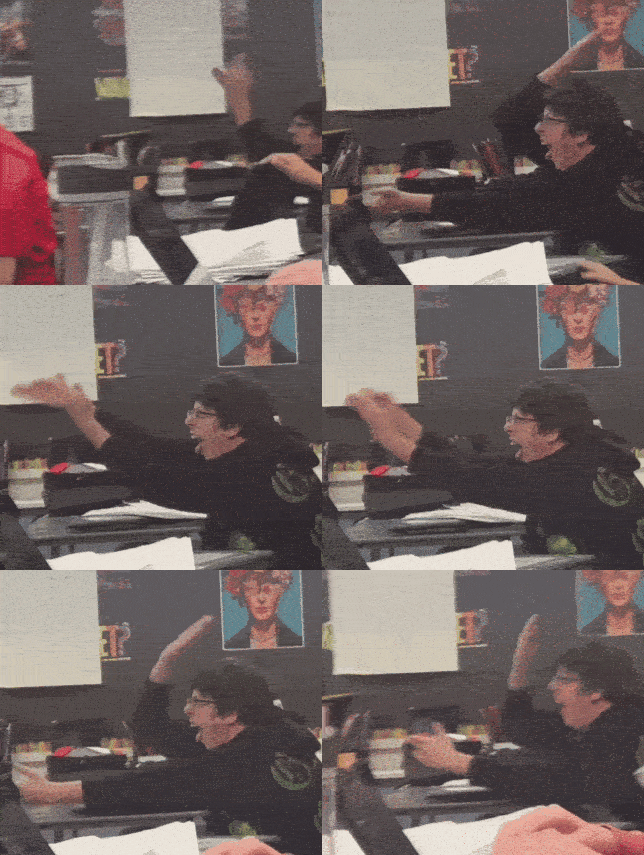
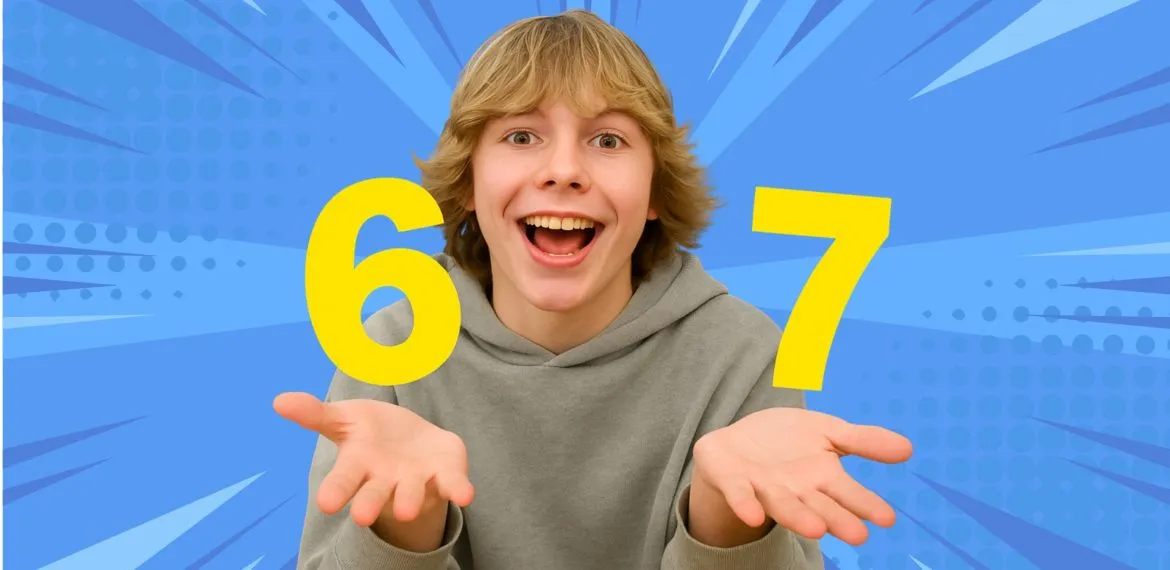
The phrase is often delivered with a sing-songy tone and a specific hand gesture — a hand motion with hands moving up and down in opposite directions and palms facing upward — and students may giggle or do it when the numbers are mentioned. You might also see it written as 6 7, 67, or six-seven.
The fact that it means nothing is exactly why it spread so fast: it makes little sense on purpose, can suggest a “so-so” feeling, and works as low-effort nonsense for fitting in with peers.
Where did "six seven" come from in relation to an NBA player?
The phrase originates from the drill rap track “Doot Doot (6 7)” by Philadelphia-based rapper Skrilla, released in February 2025 and popularized on TikTok. The lyric “six seven” repeats throughout the song, making it an obvious cultural reference.
The meme really took off after a clip from an AAU youth basketball game went viral. In it, a young boy named Maverick Trevillian — later nicknamed the “67 Kid” — is seen yelling “six seven” enthusiastically into a camera. The clip spread across TikTok and Instagram Reels almost overnight.
NBA player LaMelo Ball, who stands 6 feet 7 inches tall, also became closely linked to the meme through highlight edits that used the song. This gave the phrase an extra layer — a playful nod to height — even though the connection is mostly coincidental.
By mid-2025, “six seven” frequently appeared well beyond TikTok and basketball as the trend spread into classrooms, sports arenas, and even news conferences.
How is "six seven" actually used?
Because the phrase has no set meaning, it’s incredibly flexible. Here are a few common ways people use it:
- As an exclamation — yelled randomly for fun, similar to shouting a catchphrase
- As a response to number-based questions — “How old are you?” → “Six seven.” “What time is it?” → “Six seven.” Young people also use it to confuse or playfully annoy adults, including in class when a teacher asks an unrelated question and students blurt it out instead of giving an answer.
- As a filler — dropped into conversation the way “whatever” or “you know” might be used
- As a way to signal you’re “in on it” — using the phrase shows you understand internet culture, and it often comes with a hand gesture that gets laughs from peers
Some teachers have reported that the phrase can be disruptive in the classroom, and even annoying when students use it out of context during lessons. One teacher in South Dakota described it to CNN as “like a plague — a virus that has taken over these kids’ minds.” Some schools even banned it. Others found creative ways to use it: one teacher in Michigan reportedly assigned students to write a 67-word essay explaining where the phrase came from, while some educators have worked it into activities or math-style prompts to capture students’ attention.
Why did "six seven" go viral?
A few things came together at the right time.
First, the song itself is catchy and repetitive — the kind of track that loops well in short-form video. Second, the viral basketball clip gave it a human face: a genuinely funny, enthusiastic kid doing something completely unscripted. Third, the phrase is easy to say and impossible to define, which made it the perfect internet inside joke and a low-effort way for young people to connect with peers without needing to explain it.
KnowYourMeme, the go-to database for internet culture, tracked how the meme evolved from a music clip into a full cultural phenomenon. Skrilla himself told Complex Magazine that for him personally, “six seven” means “negative to positive” — a turn in his own life. But he also acknowledged: “Everybody else got their own different meaning.”
That openness is exactly what made it stick, because it let people use the phrase to signal solidarity and ease social anxiety without having to land on one clear definition. Over time, even as its popularity faded, that flexibility helped it move from an online meme into mainstream youth culture and random classroom use.
1
"Six seven," brain rot, and the Gen Alpha way of speaking
Gen Alpha is the first generation raised almost entirely on algorithms. Their humor is shaped by TikTok, Discord, Twitch streams, and what’s often called “brain rot” — a non-pejorative term for absurdist, overexposed, or intentionally chaotic internet content.
Their slang doesn’t come from subcultures or neighborhoods the way older slang did. It evolves from memes, inside jokes, and audio clips — and it spreads at a speed that makes it nearly impossible to keep up with.
“Six seven” fits neatly into that tradition. Culture researchers have compared it to things like Pig Latin or the Cool S — secret-ish language that children and teenagers use to bond with each other in elementary and middle school settings while creating a little distance from adults. It functions as a nonsensical expression connected to youth identity, so the not knowing is part of the fun.
In October 2025, Dictionary.com named “67” its Word of the Year, calling it “a burst of energy that spreads and connects people long before anyone agrees on what it actually means.” The Swedish Institute for Language and Folklore also added “six seven” to its 2025 new word list, a sign of how widely it spread through youth culture and classrooms. Even the Merriam-Webster dictionary weighed in.
That’s a lot of institutional attention for a phrase that technically means nothing.
What "six seven" teaches English learners
Here's the honest truth: if you're learning English as an adult, you don't need to use "six seven" in conversation. But understanding it tells you something important.
Real English — the kind people actually speak — is alive. It changes. It picks up new words from music, sport, social media, and humor. And it doesn't always follow the rules you'd find in a textbook.
That's exactly why learning with Promova goes beyond grammar and vocabulary lists. Promova offers bite-sized lessons built around the English people use in real life — casual conversation, business settings, pop culture, and yes, the kind of informal language you'd hear on TikTok.
Understanding slang isn't about memorizing terms. It's about developing a feel for how language works, how it shifts, and how to keep up — without freezing every time someone says something you haven't heard before.
Final thoughts
"Six seven" is, by design, impossible to define. It means something and nothing, depending on who you ask and when you ask them. What it actually represents, though, is very real: the way language moves in the internet age, faster and more unpredictably than ever before.
For English learners, moments like this are genuinely useful. Not because you need to say "six seven" at your next job interview, but because they show you that English is not a fixed thing. It's a living system. And the more comfortable you get with that, the more confident you'll feel — wherever the conversation goes.
Six seven 🗣️.
FAQ
What does "six seven" mean in slang?
"Six seven" is a viral Gen Alpha slang expression with no fixed meaning. It can be used as a random exclamation, a filler word, or a response to questions involving numbers. Dictionary.com named "67" its 2025 Word of the Year, describing it as a burst of energy that spreads before anyone agrees on what it means.
Where did the "six seven" meme come from?
The phrase comes from the song "Doot Doot (6 7)" by rapper Skrilla, released in February 2025. It went viral after a clip of a young basketball player named Maverick Trevillian — the "67 Kid" — yelled the phrase into a camera at a youth game. NBA star LaMelo Ball, who is 6'7", also helped fuel the meme's spread.
What is Gen Alpha slang?
Gen Alpha slang refers to the informal language used by people born between 2010 and 2024. It typically comes from TikTok, memes, and internet culture. Common examples include "chopped," "unc," "ijbol," "mid," and "rizz." This type of slang spreads extremely fast because of social media.
Should English learners know internet slang like "six seven"?
You don't need to use it, but understanding it helps you follow real conversations. Internet slang shows how living English works — informal, fast-moving, and full of cultural context. Learning how slang is formed helps you feel more confident in everyday English, even when you encounter words that aren't in any dictionary yet.

 English


Comments