World Cup Football Vocabulary

Contents
This football World Cup vocabulary enhances everything from cracking the tournament format to decoding the secrets of different positions on the field.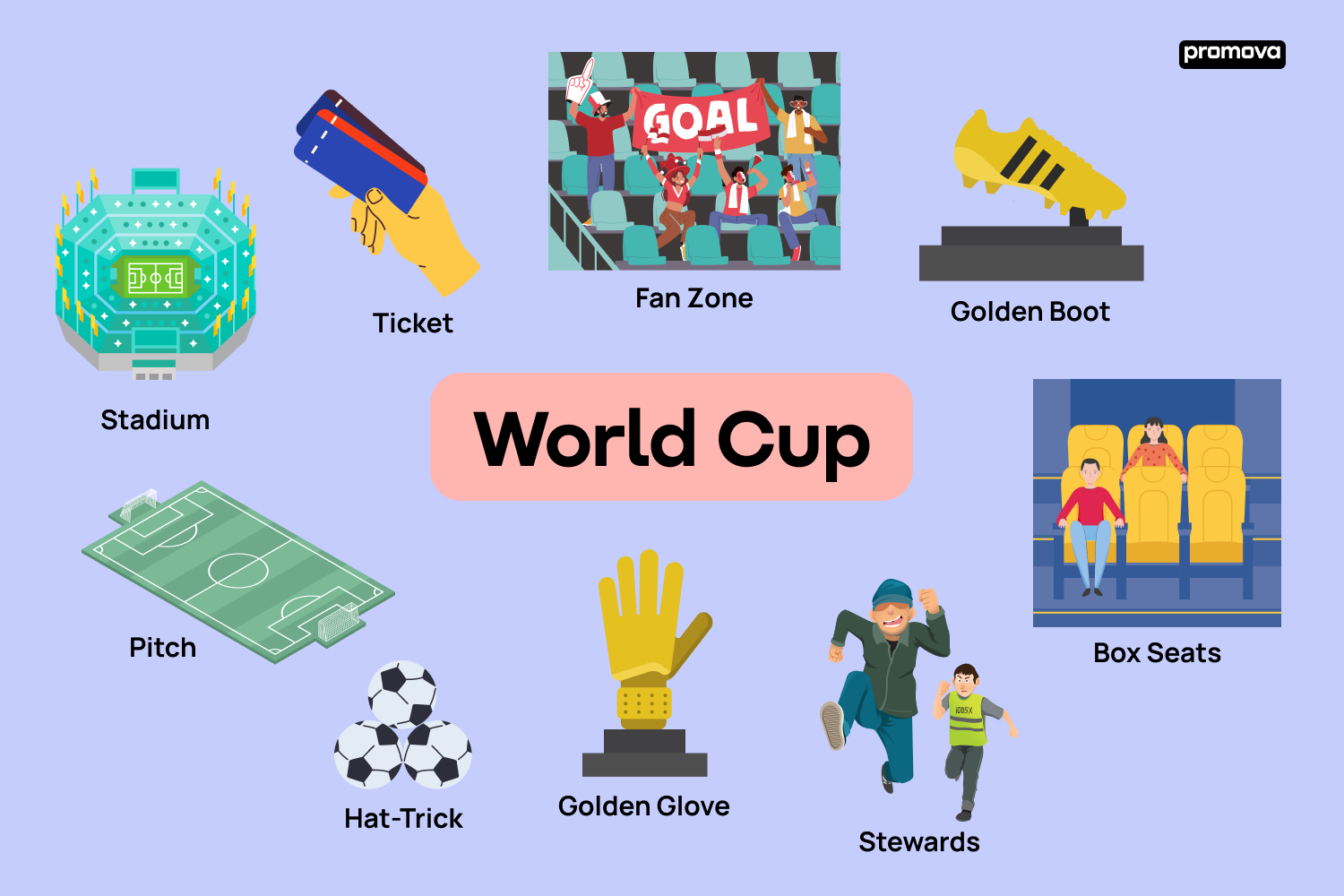
World Cup Vocabulary and Tournament Structure Terms
The World Cup tournament follows a structured format that ensures fairness and excitement throughout the competition. Here are the key terms related to the tournament structure:
- Group Stage: The initial phase has eight groups of four teams, and each team plays the other teams in its group once, earning three points for a win and one for a draw, with the teams with the most points advancing. A Dead Rubber is a group game that does not affect qualification, while a Group of Death is an especially difficult group with several top sides.
- Knockout Stage: The tournament has two stages, and this phase is made up of head-to-head ties between two teams, with the winning teams moving on.
- Round of 16: The first round of the knockout stage, consisting of 16 teams.
- Quarter finals: The stage featuring the last eight teams after the Round of 16.
- Semi-finals: The stage where four teams compete, with the winners advancing to the final match and the losers going to the third place match.
- Third-Place Playoff: A match played by the losing semifinalists to determine the third-place finisher.
- Final: The world cup final is the last match of the tournament and decides the champion.
- Qualification: The process by which national teams reach the finals through continental qualification tournaments and qualifying tournaments over a two year period, making the World Cup a major international tournament in international football, with confederation pathways across regions including Central America and South America.
All members of the top three finishers receive medals: gold for the winners, silver for the runners up, and bronze for third place.
Terms for Football Positions
Understanding the different positions on the field is crucial to appreciating the roles and responsibilities of each player during the match. Here are the key positions you should be familiar with:
- Center Forward: The primary striker responsible for scoring goals.
- Defender: A player who defends the team's goal and prevents the opposing team from scoring.
- Goalkeeper: The player stationed in the goal area, whose primary task is to prevent the ball from entering the net.
- Midfielder: A player who operates in the middle of the field, responsible for both defensive and offensive play.
- Right Back: The defender positioned on the right side of the defensive line.
- Left Back: The defender positioned on the left side of the defensive line.
- Center Back: A central defender responsible for marking opposing forwards.
- Attacking Midfielder: A player who supports the forwards and is involved in creating scoring opportunities.
- Defensive Midfielder: A player who shields the defense and breaks up the opposition's attacks.
- Winger: A player positioned on the sides of the field, responsible for crossing the ball into the attacking area.
Match Terminology
To fully immerse yourself in the excitement of World Cup football matches, it's essential to understand the terminology used during gameplay. Here are the key match terms:
- Kickoff: The starting moment of the match, where the ball is initially put into play from the center spot.
- Free Kick: A kick awarded to a team due to an opposing player's foul.
- Corner Kick: A kick awarded to the attacking team when the defending team last touched the ball before it went out of play behind their goal line.
- Yellow Card: A cautionary penalty shown by the referee to a player for misconduct.
- Red Card: A severe penalty shown by the referee, resulting in the player's ejection from the match.
- Offside: A situation in which an attacking player is closer to the opponent's goal line than both the ball and the second-to-last defender when the ball is played to them.
- Penalty Kick: A direct free kick from the penalty spot, awarded for a foul committed by a defending player within their penalty area.
- Extra Time: Additional playing time added to a match when the score is tied at the end of regulation time.
- Stoppage Time: Additional time added to each half of the match to compensate for delays, injuries, or time-wasting tactics.
- Referee: The official in charge of enforcing the rules and maintaining order during the match.
Penalty Shootout: A method of determining the winner when a match is tied after extra time, where players take penalty kicks.
1
Names of Key Football Skills
Football is a game of skill, and players showcase a wide range of abilities on the field. Here are some key football skills that make the World Cup an exhilarating event:
- Dribbling: The skill of maneuvering the ball while moving to maintain possession or beat opponents.
- Shooting: The act of kicking the ball towards the goal with the intention of scoring.
- Passing: The technique of moving the ball to a teammate with precision and accuracy.
- Heading: Using the forehead to strike or redirect the ball, often in aerial duels.
- Tackling: The defensive skill of attempting to dispossess the opponent of the ball by cleanly intercepting it.
- Agility: The ability to change direction quickly and maintain balance while in motion.
- Speed: The capacity to move rapidly across the field, outrun opponents, and create scoring opportunities.
- Vision: The aptitude to assess the game situation and make accurate decisions, often related to passing and creating chances.
- Ball Control: The ability to receive, trap, and retain possession of the ball with various body parts.
- Stamina: The physical and mental endurance required to sustain high-intensity performance throughout the match.
Stadium and Venue Terminology
The World Cup is held in stadiums and venues around the host country, creating an electrifying atmosphere for fans worldwide. Here are the stadium and venue terms associated with the tournament:
- Stadium: The arena where the matches are played, equipped with seating for spectators.
- Pitch: The playing surface of the field where the game takes place.
- Grandstand: A covered seating area for spectators, often providing the best views of the pitch.
- Stands: The areas surrounding the playing field where fans are seated or standing.
- Capacity: The total number of spectators a stadium can accommodate.
- Box Seats: Exclusive seating areas offering additional comfort and amenities for VIPs.
- Press Box: An area designated for journalists and media representatives to cover the match.
- Tunnel: The passageway connecting the field to the locker rooms, where players enter and exit the pitch.
- Hospitality Suite: A private space within the stadium where corporate sponsors entertain guests.
- Ticket: A pass granting admission to a World Cup match, often in the form of a physical or electronic document.
- Roar of the Crowd: The thunderous applause and cheers echo throughout the stadium, lifting the spirits of the players.
- Hat Trick Stand: A section of the stadium where fans celebrate when a player scores a hat trick, wearing hats and waving them in excitement.
- Stewards: The friendly staff responsible for ensuring the safety and well-being of spectators during the match.
- Halftime Show: An entertaining performance, often featuring music or cultural displays, to keep the crowd engaged during the break.
- Fan Zone: A designated area around the stadium where fans gather to watch matches on big screens, enjoy festivities, and share their love for the game.
Football Jargon and Slang
Football has its fair share of jargon and slang, adding character and flavor to the sport. Here are some popular terms you may encounter:
- Derby: A match between two rival teams from the same city or region.
- Nutmeg: When a player skillfully passes the ball through an opponent's legs.
- Hat-Trick: Scoring three goals in a single match.
- Clean Sheet: A match in which a goalkeeper does not concede any goals.
- Catenaccio: A defensive tactic characterized by a deep-lying defense and emphasis on counter-attacks.
- Panenka: A penalty kick taken with a delicate chip down the center of the goal.
- Tiki-Taka: A style of play characterized by quick, short passes and maintaining possession.
- Bicycle Kick: A spectacular overhead kick where a player strikes the ball while in mid-air.
- Nutritional Pyramid: A term used to describe the optimal diet and nutrition plan for football players.
- Park the Bus: A defensive strategy where a team defends with all players behind the ball to protect their lead.
- Pitch Invasion: When excited fans rush onto the field after a remarkable victory, bringing the party to the players.
- Rabona: A fancy move where a player wraps their kicking leg around the back of the standing leg to strike the ball.
- Magic Sponge: A humorous reference to the sponge used by the team physiotherapist to magically heal players' injuries.
Names of World Cup Trophy and Awards
The World Cup football trophy is the ultimate symbol of achievement in football. Here are some key terms related to the trophy and awards:
- FIFA World Cup Trophy: The current trophy was designed by Italian designer Silvio Gazzaniga; it is 36 cm tall, made of solid 18-carat gold, and weighs 6.175 kg. After the post-match celebration, the champions receive a gold-plated replica, while the original trophy is not kept permanently.
- Jules Rimet Trophy: The trophy used from 1930 to 1970, named after FIFA president Jules Rimet, who organized the first World Cup.
- Golden Boot: An award given to the tournament’s top goal scorer.
- Golden Ball: The award presented to the tournament’s best player, as determined by journalists.
- Golden Glove: An accolade awarded to the best goalkeeper of the tournament.
- Fair Play Award: A recognition given to the team that displayed the best sportsmanship and fair play.
- Young Player Award: An honor bestowed upon the best young player of the tournament.
- All-Star Team: A selection of the best players in each position, forming a dream team.
- Top Scorer: The player who scores the most goals during the tournament.
- Most Valuable Player (MVP): The player deemed to have made the most significant impact on the tournament.
- Best Goal: The goal recognized as the most impressive or skillful of the tournament.
Conclusion
From understanding the football World Cup tournament structure and football positions to grasping match terminology and key skills, you are well-prepared to immerse yourself in the excitement of the world's greatest football event.
FAQ
What is a "goal"?
What does "offside" mean in football?
What is a "penalty kick"?
What does "extra time" refer to in football?
Make your next step to fluency with Promova

 English
 Français
 Português
 Español


Comments